
A court deadline does not wait for a recipient to answer the door, return a call, or make their location easy to confirm. Suffolk legal delivery requires more than getting papers from one place to another. When the document requires formal service, the method, timing, recipient, and proof of completion can all affect what happens next in the case.
For attorneys, legal departments, landlords, property managers, and self-represented parties, the practical goal is straightforward: send complete documents with clear instructions, choose the right turnaround, and receive usable proof once service is completed. The details behind that workflow are what keep a time-sensitive matter from becoming a preventable delay.
Legal Delivery Is Not Always Process Service
“Legal delivery” can describe several different tasks. A firm may need pleadings served on a defendant, a subpoena delivered, courtesy copies sent to counsel, or documents transported for filing. Those tasks may look similar at the start, but they do not carry the same procedural requirements.
Service of process is the formal delivery of legal papers in a manner authorized by the applicable rules. It provides notice to the party or person involved and creates the foundation for the case to proceed. A courier delivery, by contrast, may confirm that an envelope arrived but may not satisfy service requirements.
That distinction should be made before an order is placed. If the document must be served, provide the papers exactly as issued or filed, identify the recipient, and share any known information that may help locate or identify that person. If the assignment involves court filing or a document pickup, state that clearly so the delivery is handled as the task actually requires.
What Makes Suffolk Legal Delivery Reliable
The strongest legal-support workflow is not built around guesswork. It begins with a readable set of documents and instructions that answer the operational questions before the first attempt is made.
A useful service request identifies the correct recipient name, the best available address, apartment or suite details, a phone number or workplace when available, and any deadline that affects timing. It should also flag facts that change the approach, such as gated access, a business with restricted hours, a known alternate address, safety concerns, or prior unsuccessful attempts.
Local familiarity matters here. Suffolk County includes dense downtown areas, suburban residential neighborhoods, commercial corridors, seasonal locations, and addresses where the mailing address does not tell the full story. A process server who understands the geography can plan attempts around travel time, access patterns, and likely hours of availability instead of treating every address as identical.
Reliability also means documenting the result. Completed service should be supported by the records needed for the matter, whether that means an affidavit of service, a declaration, or another appropriate proof of completion. A good process is accountable at both ends: the sender knows what was ordered, and the legal file has documentation after the work is done.
Choose the Turnaround That Fits the Deadline
Not every assignment needs the same response time. Routine service is often the practical choice when there is sufficient time before a return date, hearing, motion deadline, or filing requirement. It gives the server room to make thoughtful attempts and account for an unavailable recipient.
Rush service is appropriate when time is shorter but the assignment still allows for a coordinated effort. Same-day service is best reserved for situations where prompt action is genuinely necessary, such as an imminent court date, a newly issued order, or a document that must move without delay.
The fastest option is not automatically the best option. If the recipient is difficult to locate or only available at unusual hours, accurate intelligence may be more valuable than simply requesting an earlier first attempt. On the other hand, waiting to order service until the deadline is close can eliminate options and increase case pressure. The right choice depends on the deadline, the quality of the address information, and the likelihood that the recipient can be reached quickly.
Send Complete Instructions Before Service Starts
Incomplete orders create avoidable back-and-forth. Before submitting a Suffolk legal delivery request, review the documents as though someone unfamiliar with the case will need to act on them immediately.
Confirm that all pages are included and legible. Check that the caption, index number or docket number, recipient name, and address match the documents and your instructions. Include any service deadline, court date, special handling request, and a reliable contact person who can answer a question quickly.
If you have more than one address, provide each one with context. An address labeled “possible workplace, weekdays after 9 a.m.” is more useful than a second address with no explanation. The same is true of known vehicles, building entry details, unit numbers, or information about when the recipient is usually present.
Do not assume a server can correct a document error in the field. If the papers name the wrong party, omit a required page, or contain inconsistent information, resolve that issue before service begins. Process service supports your case procedure, but it cannot repair defective paperwork.
Special Instructions Should Be Practical
Helpful instructions are specific and fact-based. They explain what the server may encounter, not what the server should assume. For example, note that a business closes at 5 p.m., a tenant works overnight, or prior attempts showed that an address is vacant.
Avoid sending only broad directions such as “serve immediately” or “recipient is evasive.” Those statements may communicate urgency, but they do not help plan an effective attempt. Pair urgency with the information needed to act on it.
Track the Assignment Without Slowing It Down
Legal work moves quickly when the status is clear. The person handling the file should be able to confirm when an order was received, whether service is in progress, whether an issue needs attention, and when proof is available.
That does not mean every assignment produces the same result. A recipient may be served on the first attempt, may require multiple attempts, or may no longer be at the supplied address. In some cases, counsel may need to reassess the address, request additional investigation, or seek guidance on an alternative service method through the court. A reliable provider reports the facts promptly so the next decision can be made before time runs out.
For firms handling multiple matters, a direct online ordering process can reduce intake errors and make it easier to keep instructions attached to the correct case. Clear flat-rate pricing also helps legal teams decide whether routine, rush, or same-day service fits the assignment without waiting for a custom quote.
Avoid Common Service Delays
Many service problems begin before the papers leave the office. The most common issues are an outdated address, a missing unit number, documents sent without all required pages, unclear turnaround expectations, and failure to provide a deadline.
Another frequent problem is waiting too long after papers are issued. A matter may appear routine until the first address proves unproductive. Ordering early creates room for additional attempts or revised instructions. Ordering late turns a manageable field issue into a deadline emergency.
It is also wise to separate what you know from what you suspect. If an address has been verified, say so. If it came from an old lease, public record, prior correspondence, or a client report, identify the source when it may affect confidence in the location. Better information produces better decisions.
A Direct Way to Keep the File Moving
Suffolk legal delivery works best when the request is treated as a case task with real procedural consequences, not a simple errand. Submit complete papers, provide usable recipient details, select a service speed that matches the deadline, and make sure proof is ready for the file once service is completed.
Bravo Process Servers LLC provides routine, rush, and same-day service options for matters requiring professional attention in Suffolk County. When the deadline is close or the address presents a challenge, clear instructions and prompt action give your case the best chance to keep moving.
Need papers served in Nassau or Suffolk County?
Same-day, rush, and routine service with court-ready affidavits.
Related services
Related posts

November 3, 2026
Substituted Service Versus Personal Delivery
Substituted service versus personal delivery: learn how each method works, when court rules allow it, and how to document service correctly in New York civil cases today.
Read Article →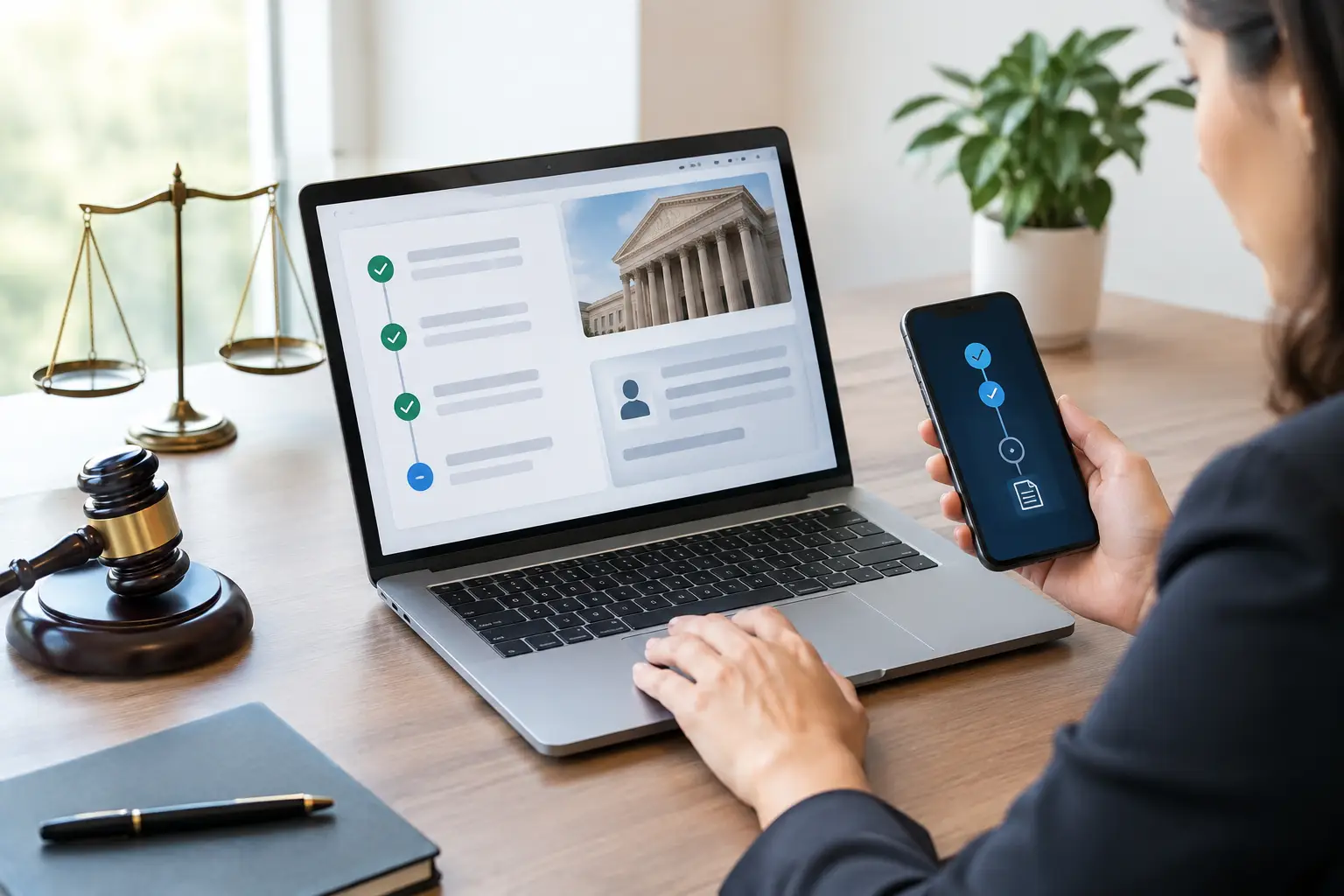
November 1, 2026
How to Track Legal Service Status Without Delays
Learn how to track legal service status, document each attempt, respond to issues quickly, and keep Nassau and Suffolk cases moving on time, every case.
Read Article →
November 1, 2026
How Landlords Serve Eviction Notices Correctly
Learn how landlords serve eviction notices, when formal service is required, and how Nassau and Suffolk property owners can document delivery correctly.
Read Article →